


Nature Walk@ARAI60
Nature Walk – 60 years of Growth: Hearing the Whispers of Nature
The Automotive Research Association of India (ARAI), the apex regulatory and research body under the Ministry of Heavy Industries, continues to play a pivotal role in promoting a safe and cleaner automotive ecosystem. Equipped with state-of-the-art test facilities, ARAI supports the industry’s transition towards sustainable mobility and the national net-zero emissions target through its core work. As part of its Diamond Jubilee celebrations, On the eve of International Day of Forests which is observed worldwide on 21st March of every year, ARAI organised a Nature Walk and Biodiversity Awareness event to sensitise the ARAIans about the importance of nature around them. The initiative received an overwhelming response, with enthusiastic participation from staff members who explored the campus’s rich biodiversity spread across its vast green expanse of over 105 hectares, teeming with diverse flora and fauna. The activity fostered a deeper appreciation for the natural surroundings and instilled a strong sense of responsibility to give back to nature through conscious daily actions. This year is special as ARAI completed its 60 glorious years in serving the nation in the automobile field, the event gets more significant as the trees and nature also completed 60 years of growth and they have a story to share with every ARAIans and it was rightly called 60 Years of Growth: Hearing the Whispers of Nature. The walk was noteworthy as it brought a sense of belongingness to the rich biodiversity within the Kothrud premises of ARAI. We invited a biodiversity expert Mr. Kedar Champhekar to conduct the program, who has pursued M.Sc. in Biodiversity from Pune University and is working in the field of biodiversity education and research since last 19 years.
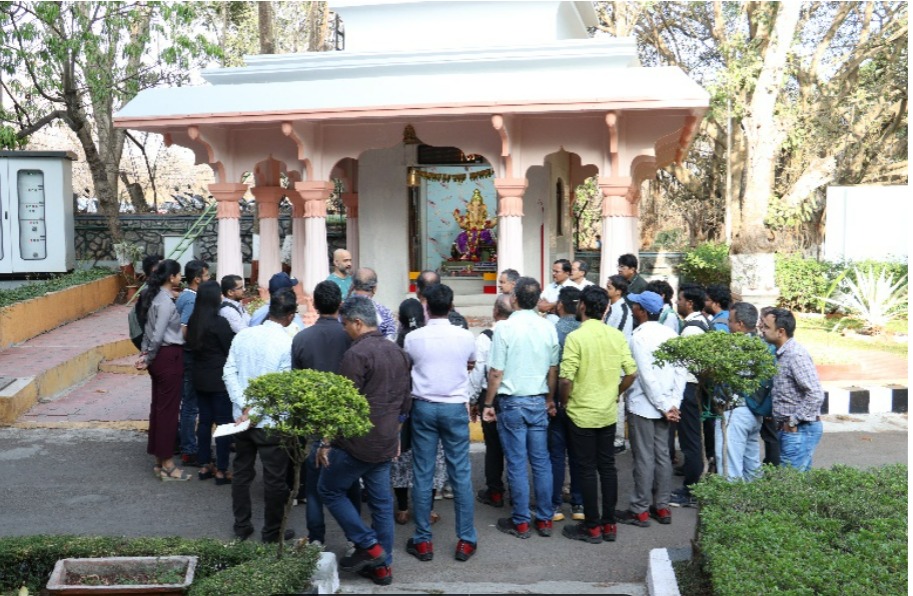
The Nature Walk began with a thoughtful discussion on the global theme for the year, “Forests and Economies” from the Ganesh temple. Participants were introduced to the idea that forests are not merely green spaces or it is not always contrary to the development as perceived generally but vital contributors to ecological stability and economic well-being. Mr. Champhekar highlighted how forests support human life by regulating climate, maintaining water cycles, improving air quality, and providing resources such as food, medicine, timber, and non-timber forest produce. He also emphasized on the symbiotic relation among the trees, pollens, fruits, birds and humans and sustainable economies depend heavily on healthy forest ecosystems and the conservation is essential for long-term environmental and economic resilience.
Following the thematic discussion, participants embarked on an experiential learning walk across the ARAI campus, which served as an open-air classroom rich in biodiversity. Instead of learning from presentations or textbooks, participants explored trees in their natural surroundings, observing their physical characteristics, ecological roles, and cultural significance. As ARAI celebrates 60 years of its establishment, special attention was drawn to the trees that are older than the institution itself, as well as those that have grown alongside its progress in serving the nation. The walk thus became a symbolic journey into the living history of the campus, where trees were viewed as silent witnesses to decades of institutional growth and environmental change.
During the walk, several important tree species were discussed in detail. The Raintree attracted particular interest due to the unique phenomenon associated with it, where droplets fall from its canopy. Participants learned that this is not rainfall but excreta from wasps that feed on the tree’s sugary sap. This explanation helped participants understand intricate insect-plant interactions that exist in forest ecosystems. The Ashok and Sita Ashok trees were introduced through both biological and cultural perspectives. The name “Ashok,” meaning “without sorrow,” was explained along with mythological beliefs that associate the tree’s beauty with emotional well-being and positivity, reinforcing the strong link between nature and human culture.
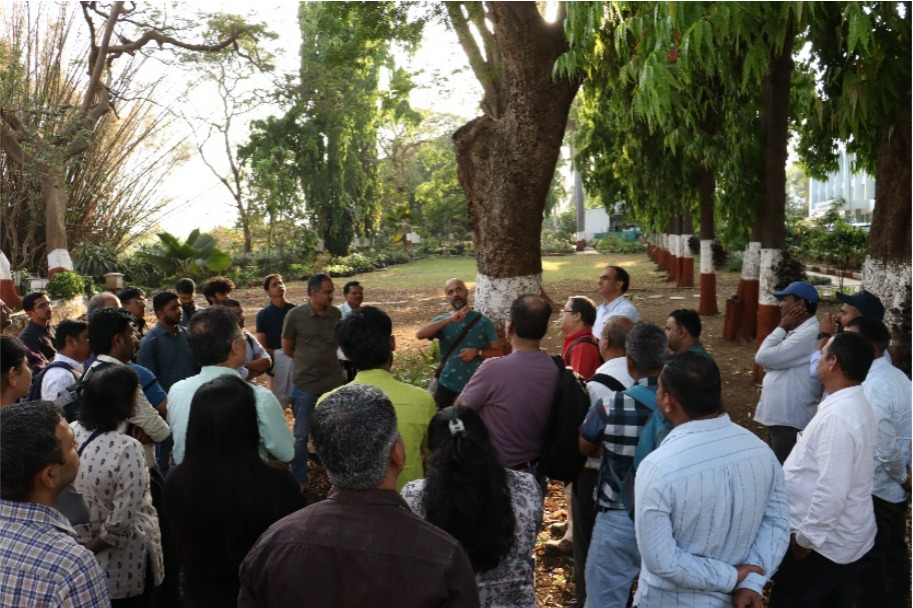
The discussion on Fig trees (Ficus species) was a highlight of the walk. These trees were explained as keystone species that support a wide range of birds, insects, and animals throughout the year. The biodiversity expert elaborated on the remarkable symbiotic relationship between fig trees and fig wasps, where each depends entirely on the other for survival and reproduction. Traditional conservation practices, such as building temples beneath fig trees, were discussed as examples of how cultural beliefs have historically contributed to ecological protection. This illustrated how traditional knowledge systems align closely with modern ecological understanding.
Other significant species such as Neem and Sandalwood were also discussed. Neem’s medicinal, antiseptic, and insect-repellent properties were explained, showcasing its importance in traditional healthcare. Sandalwood was highlighted for its aromatic and economic value, along with the need for conservation due to historical over-exploitation. The Reetha (Soapnut) tree generated considerable interest as participants learned about its natural saponin content, traditionally used as soap, shampoo, and detergent. Its biodegradable and eco-friendly nature was discussed as a strong example of how forest resources can support sustainable and green economies. Its use was shown practically with a good amount of foam.
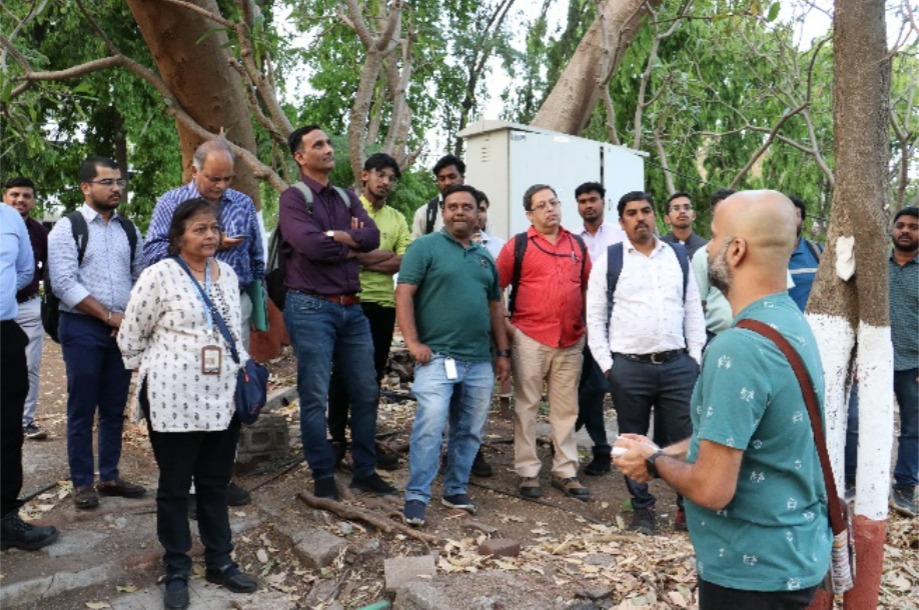
Beyond trees, participants were introduced to basic bird-watching techniques, including observing bird behaviour without disturbance and identifying species using physical traits and calls. The introduction of Merlin Bird ID app was also informed, where the bird species can be identified with their sound and pictures with the help of modern technologies like smartphone. During the walk, participants were delighted to spot peacocks, and the expert explained the ecological and biological importance of their feathers. It was shared that the number and quality of feathers indicate the health of a male peacock and play a key role in attracting females, offering insight into natural selection and mating behaviour.
The walk also focused on building skills in nature observation and documentation. Participants learned how to identify trees through leaf shape, bark texture, and canopy structure, as well as the importance of recording observations to encourage long-term environmental awareness and citizen science practices. This helped participants develop a more attentive and respectful approach towards natural surroundings.
Sustainability practices were strongly reinforced throughout the event. Participants were served bananas and oranges during the walk, and discussions were held on the importance of consuming natural, organic foods instead of packaged snacks, especially during nature trails. The session emphasized responsible behaviour such as avoiding plastic waste, not littering, and minimizing disturbance to ecosystems while trekking or walking in forested areas.
Participants shared overwhelmingly positive feedback following the Nature Walk. Many expressed happiness and appreciation for learning about the rich biodiversity of the ARAI campus and gaining a deeper understanding of the symbiotic relationships between pollens, trees, fruits, insects, birds, and human life. Participants found the experiential learning approach highly engaging and meaningful, as it helped them connect theoretical knowledge with real-world observations. The stories, myths, and ecological explanations shared during the walk left lasting impressions and inspired participants to adopt more environmentally conscious behaviours.
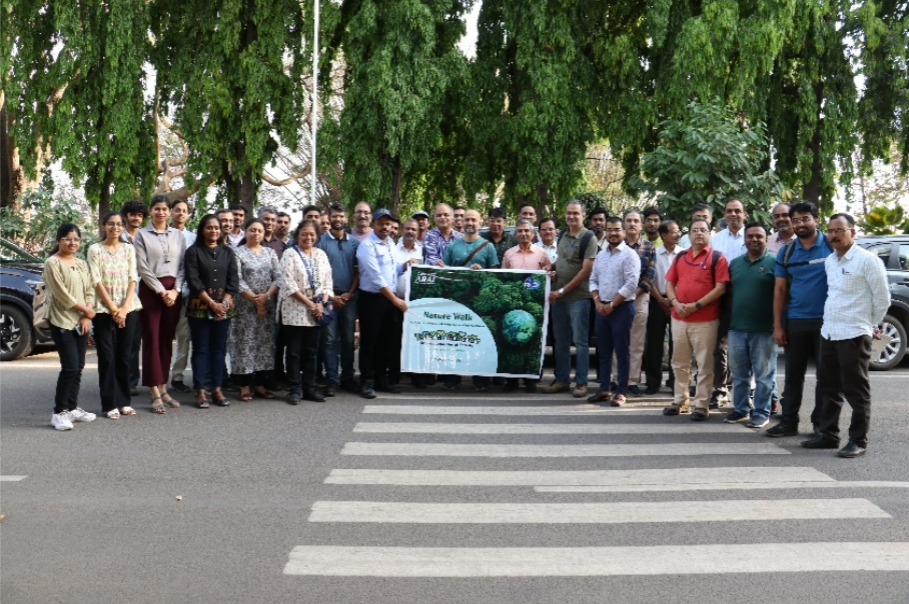
In conclusion, the Nature Walk on the eve of the International Day of Forests was a successful and enriching event that blended learning, celebration, and conservation awareness. It strengthened participants’ connection with nature, highlighted the interdependence between forests and human economies, and celebrated ARAI’s 60-year journey alongside its living green heritage. The programme reaffirmed the importance of protecting biodiversity and fostering responsible environmental stewardship for future generations. As ARAI commemorates its Diamond Jubilee, the Nature Walk stands as a reflection of the institution’s enduring legacy—instilling in its people a generational responsibility to preserve, protect, and build upon this natural heritage, to sustain naturecentric initiatives as a defining part of ARAI’s ethos, and to inspire society by leaving behind a greener, wiser, and more resilient legacy for the decades to come.